
Ken Woo
May 4, 2025
Using Nature’s Own Cartilage Blueprint to 3D-Print Stronger Repairs
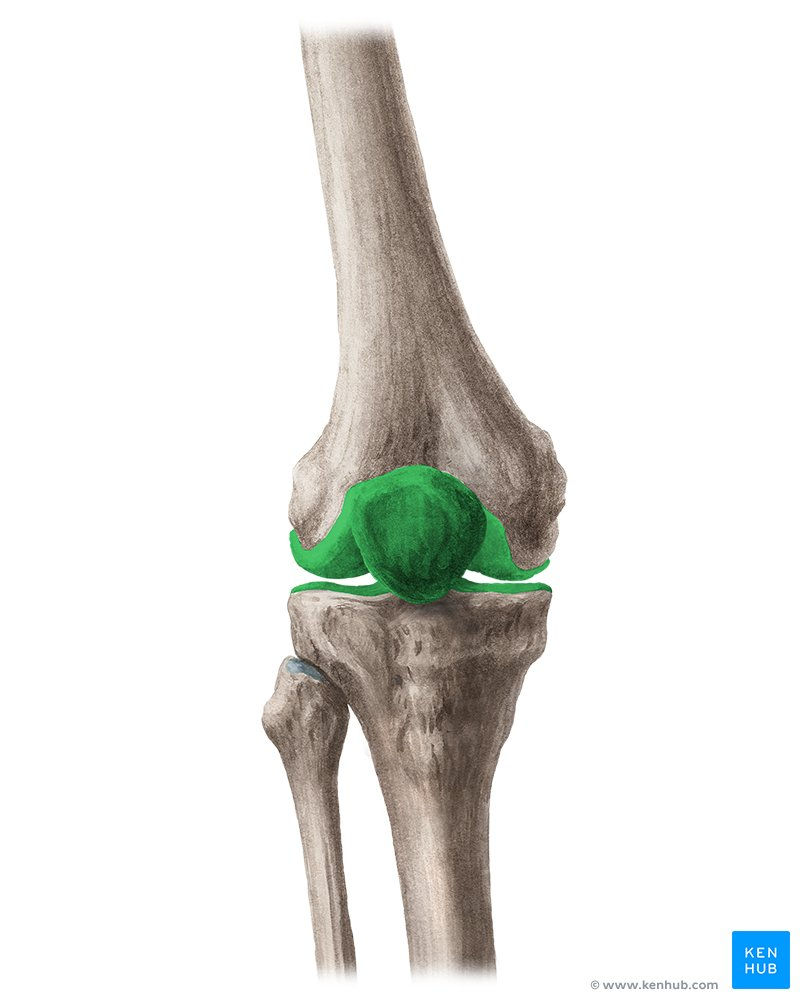
Cartilage is the slippery layer that covers the ends of your bones in joints like your knees and elbows. This tissue, called articular cartilage, acts like a shock absorber and lets bones slide smoothly. Under the microscope it looks simple, but it is actually built from a network of long protein strands called collagen and sponge-like molecules called proteoglycans. Collagen is a strong rope-like protein that provides structure. Proteoglycans are proteins with sugar chains that attract and hold water like a sponge. Together they make a gel that can handle millions of steps or bends over a lifetime.
One problem is that cartilage has almost no blood vessels. Without blood vessels it cannot bring in new cells and nutrients to heal itself. Instead of rebuilding the original gel network, damaged cartilage fills in with scar tissue made mostly of a weaker form of collagen. Over time the joint becomes rough and stiff leading to osteoarthritis, a painful condition that affects millions of people worldwide.
Scientists recently reviewed how cartilage forms when we are still in our mother’s womb and during childhood. During those stages collagen strands naturally arrange themselves into three layers. In the top layer the strands run side to side to resist sliding forces. In the middle layer they weave in random directions for flexibility. In the deep layer they grow up and down into the bone to absorb compression forces. This pattern forms without active guidance from cartilage cells, also called chondrocytes. Instead, it happens automatically as the tissue grows and experiences movement. Understanding these physical cues is important because adult chondrocytes replace cartilage matrix very slowly and tend to produce scar tissue instead of the original gel.
To copy nature’s design researchers are now combining living cells with advanced manufacturing in a process known as biofabrication. Three-dimensional bioprinting can lay down cell-laden gels layer by layer so that cell density and material properties change with depth. However, printed gels alone cannot recreate the aligned collagen network needed for long-lasting strength.
To solve this problem teams have added methods such as melt electrowriting, a way to print very fine polymer fibers in chosen directions so that cells growing on them build their own collagen along those fibers. In one experiment scientists seeded chondrocytes into a melt-electrowritten scaffold and saw the cells align their collagen into split-line patterns similar to those in real cartilage.
Other approaches use physical forces to guide the fibers. Magnetic microgel alignment means embedding tiny gel beads that can be moved by magnets so that they line up and encourage cells to follow the same direction. Filamented light biofabrication uses a pattern of light projected through a device to carve microchannels in a soft gel so that cells grow in those channels, laying down collagen in straight lines. And Transwell systems are culture devices with two compartments separated by a thin membrane. By supplying growth factors from below, the cartilage sheet grows upward and pulls collagen strands into a vertical orientation that mimics the deep-zone arcade-like structure.
Despite these innovations no one has yet reproduced the smooth rotation of fibers from top to bottom or the exact mix of proteoglycans that gives cartilage its springy, water-rich feel. Implants also must join seamlessly with the patient’s own cartilage and bone without causing inflammation. Finally, making complex multi-material scaffolds in large quantities and obtaining regulatory approval will require many more tests.
Still, combining what we learn from how cartilage builds itself in early life with precision engineering marks a major step forward. By using nature’s own blueprints we may soon have living cartilage implants that truly restore joint function and last for decades.
Works Cited
Moliner, Alba Pueyo, et al. “Restoring Articular Cartilage: Insights from Structure, Composition and Development.” Nature Reviews Rheumatology, vol. 21, no. 5, May 2025, pp. 291-308. https://doi.org/10.1038/s41584-025-01236-7.